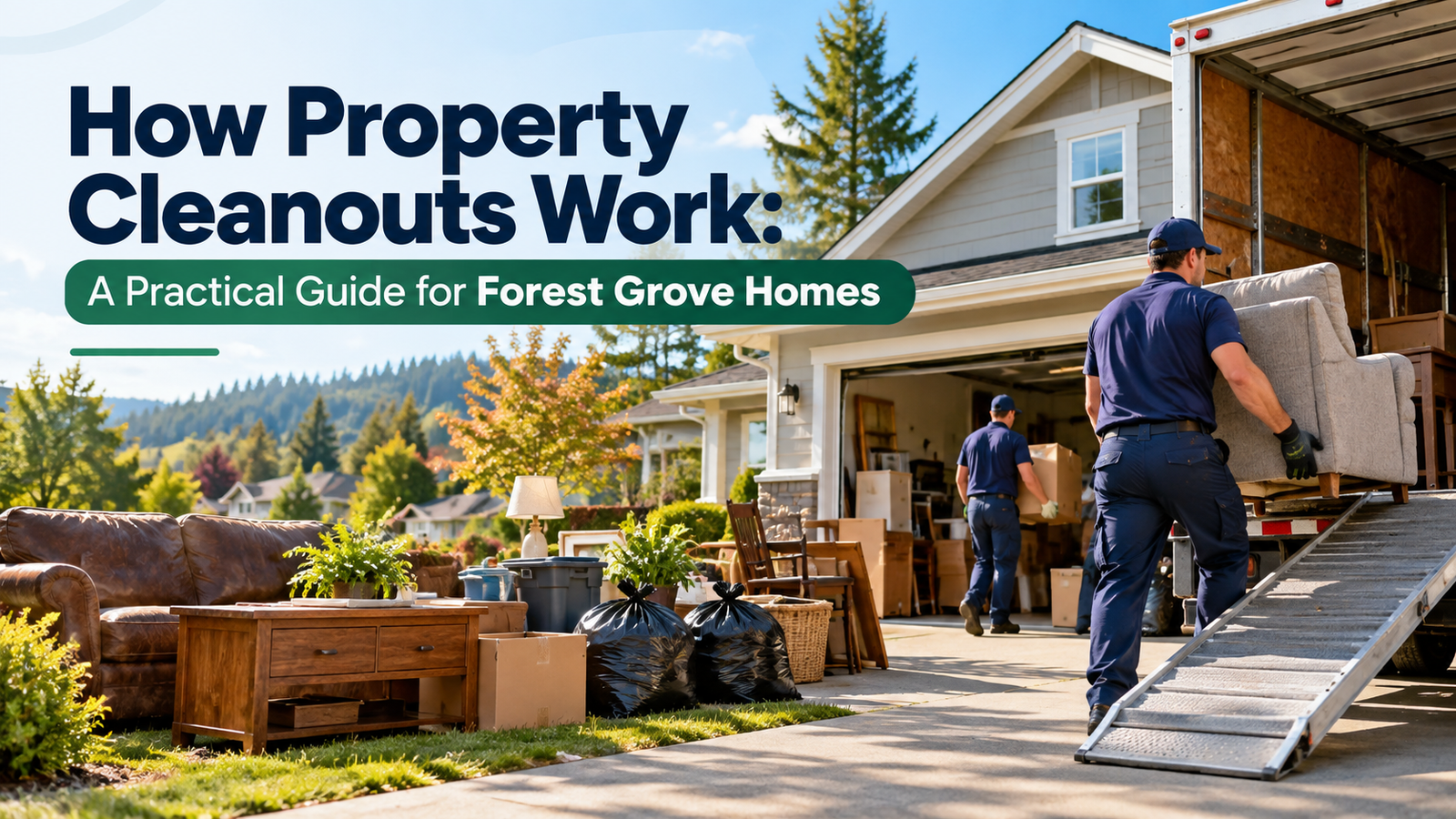
Almost every property reaches a point where the stuff outgrows the space. A garage becomes a storage unit for things nobody remembers buying. A basement fills with boxes from three moves ago. A parent’s house needs to be emptied after a loss or a transition. A rental needs to be cleared between tenants. A cleanout is the organized process of sorting, removing, and clearing out belongings and debris from a space, and while the idea is simple, the practice can feel overwhelming.
This guide explains what a Cleanout Services Forest Grove involves, the different situations that call for one, how the work is typically organized, and the practical and safety issues that come up along the way. It also looks at conditions specific to the Forest Grove area, from damp Pacific Northwest basements to rural outbuildings and a college town’s seasonal turnover. The aim is to give readers a clear framework for understanding the process, whether they are planning one or just trying to make sense of it.
What a Cleanout Is, and What It Is Not
A cleanout is different from ordinary tidying. Tidying rearranges what you keep. A cleanout reduces what is there, usually by a large amount, and often involves moving, donating, recycling, and discarding items in bulk. It may cover a single room, a whole property, or a specialized space like a shed, storage unit, or barn.
It is also different from a renovation or demolition. A cleanout deals with contents rather than structure, though it often comes right before one of those projects, since a space has to be empty before it can be repaired, painted, or sold.
Common Types of Cleanouts
Different situations create different challenges.
Garage and basement cleanouts. These spaces collect stored items, old equipment, seasonal gear, and projects that never got finished. They tend to be dusty and sometimes damp, and they often contain a mix of valuable items and plain clutter.
Attic cleanouts. Attics often hold heirlooms, old paperwork, and insulation-covered boxes. Access can be tight, temperatures can be extreme, and weight on the ceiling joists below is something to keep in mind.
Estate cleanouts. When a home must be emptied after a death or when a family member moves to assisted living, the work carries emotional weight and practical complexity. Decisions about valuables, documents, and sentimental items usually involve multiple family members.
Rental and tenant turnover cleanouts. Properties vacated by tenants may be left with furniture, trash, or abandoned belongings that need to be cleared before the next occupant.
Foreclosure and vacant property cleanouts. Properties that have been left unoccupied may contain a wide range of debris and may need to be cleared to meet local property standards.
Storage unit and shed cleanouts. These tend to be filled with tightly packed items accumulated over years, sometimes forgotten.
Hoarding situations. Extreme accumulation presents safety and sanitation risks and calls for sensitivity as well as care. It involves compassion for the person involved and often requires coordination with family or support professionals.
Post-renovation or post-storm cleanouts. After construction or weather damage, debris and ruined materials must be removed.
Why People Do Them
The reasons are varied, and they affect how the work is approached.
- Preparing a home for sale, since clutter makes rooms look smaller and complicates inspections
- Making room for a move, remodel, or new use of a space
- Settling an estate or helping a relative downsize
- Clearing safety hazards such as blocked exits, fire risks, or pest habitats
- Regaining usable space for vehicles, hobbies, or storage
- Meeting the terms of a lease or property regulations
Understanding the purpose helps set priorities. A cleanout for a sale focuses on speed and presentation. An estate cleanout focuses on care and documentation. A hazard cleanout focuses on safety first.
The Four-Pile Method
Most organized cleanouts rely on some version of sorting into categories. A common approach uses four.
- Keep. Items that are used, needed, or truly valued.
- Donate or sell. Usable items that someone else could benefit from.
- Recycle. Materials with a recycling channel, such as metal, cardboard, electronics, and some plastics.
- Dispose. Items that are broken, contaminated, or have no further use.
A fifth category is often worth adding: special handling. This includes hazardous materials, documents that contain personal information, firearms, medications, and anything with legal or safety implications.
The discipline of the method is that every item gets a decision, and decisions are made quickly. Hesitation is the main time sink in cleanouts, because every object has a story, and a pile of undecided items slows everything down.
A Sample Planning Timeline
Cleanouts go smoother with a rough plan. The details depend on the size of the space and how much time is available, but the structure is similar.
| Phase | What happens | Why it matters |
|---|---|---|
| Assessment | Walk the space, note quantity, hazards, access, and special items | Sets scope and exposes surprises early |
| Preparation | Gather boxes, bags, gloves, labels, and set up sorting zones | Prevents delays once work starts |
| Sorting | Go room by room using the categories | Builds momentum and keeps decisions organized |
| Removal | Move donations, recyclables, and trash out of the space | Clears working room and shows progress |
| Final clean | Sweep, wipe, and inspect the empty space | Reveals hidden damage or problems |
| Follow-up | Deliver donations, handle special items, and confirm everything is resolved | Closes the loop |
Starting with the least emotional areas, such as the garage or a utility closet, builds confidence before tackling rooms with more sentimental material.
Safety Considerations
Cleanouts involve physical work in spaces that may not have been entered for years. Several risks are worth attention.
Lifting and strain. Boxes of books, tools, and old equipment are heavier than they look. Lifting with the legs, using carts, and asking for help with heavy or awkward items reduces the risk of injury.
Dust and mold. Disturbed dust can irritate the lungs, and mold can be present in damp areas. A properly fitted mask and gloves are sensible, and any large area of visible mold calls for more caution than ordinary cleaning.
Pests and droppings. Rodents, insects, and other animals may have used undisturbed spaces. Rodent droppings can carry disease, and sweeping them dry can send particles into the air. Dampening the area and using protective gear is the usual advice, and heavy infestation warrants extra care.
Sharp objects. Broken glass, nails, rusty metal, and needles may be hidden in boxes and piles. Sturdy gloves and closed shoes are basic equipment.
Hazardous materials. Old paint, pesticides, fuel, solvents, and batteries must be kept apart from the regular trash. Unlabeled containers should be treated with caution.
Structural and electrical hazards. Damaged floors, loose stairs, overloaded shelving, and exposed wiring are possible in neglected spaces.
Fatigue and dehydration. Long hours of physical work, especially in a warm attic or a cold garage, take a toll. Breaks and water help.
Local Conditions in and Around Forest Grove
The Tualatin Valley and its surroundings shape the typical cleanout in several ways.
Damp basements and garages. The Pacific Northwest’s long wet season means that stored cardboard, fabric, and paper often absorb moisture. Mold, mildew, and musty odors are common, and boxes at the bottom of a stack can be collapsed or rotted. Wet cardboard loses its strength and is hard to carry, so it is wise to move items carefully and consider that anything stored directly on a concrete floor may be damaged.
Rural properties and outbuildings. Many properties near Forest Grove include barns, sheds, workshops, and detached garages. These often contain farm equipment, treated lumber, fencing materials, chemicals, fuel containers, and decades of accumulated tools. Rodents are a common presence, and deer mice in particular can carry hantavirus, so ventilating a space before entering and avoiding stirring up dust is a standard precaution.
Yard and vegetation debris. Fast-growing vegetation and abundant rain mean that overgrown areas, fallen branches, and old brush piles are frequent parts of a property cleanout.
Seasonal timing. Dry summer weather is the most comfortable time to work outdoors and in uninsulated spaces. Winter cleanouts are possible but are slowed by rain, short daylight, and wet materials.
University and rental turnover. In a college town, the end of the academic year and the start of the fall term create waves of move-outs and move-ins. Furniture, appliances, and household items are commonly left behind, and demand for reuse channels is high at those times.
Estate Cleanouts and Sentimental Items
Emptying a family home after a death or a transition is as much emotional as physical. A few considerations apply.
Before removing anything, it is wise to locate important documents, including wills, deeds, insurance policies, tax records, bank statements, and identification. These can be mixed in with ordinary papers. Jewelry, cash, and small valuables sometimes turn up in unexpected places such as coat pockets, books, and kitchen containers.
Photographs and personal letters deserve special attention. It is common to scan photographs and keep a smaller set of originals rather than saving everything. Sentimental objects can be shared among family members, photographed, or kept as a representative selection.
Documents containing personal information, such as old bank statements and medical records, should be shredded rather than put in the recycling or trash, to reduce the risk of identity theft.
If legal matters like probate are involved, it is important to understand what may be disposed of and when. Items with possible value, such as antiques, art, and collectibles, may need to be appraised before they are donated or discarded.
Where the Items Go
A cleanout produces a flow of material that needs a destination, and thinking about this early keeps the work organized.
Reuse. Furniture, clothing, kitchenware, tools, and books in good condition can be donated to charitable organizations, thrift stores, and community groups. Many accept only clean, functional items, so it helps to call ahead about what they take.
Recycling. Metal, cardboard, paper, and certain plastics can be recycled through curbside programs or local facilities. Electronics are handled through Oregon’s E-Cycles program, and mattresses, paint, and batteries have their own channels.
Hazardous waste. Chemicals and fuels go to hazardous waste collection rather than the regular trash.
Landfill. Items that cannot be reused or recycled are disposed of as trash, usually through a transfer station.
Separating these streams at the point of sorting is much more efficient than sorting a mixed pile later.
Common Mistakes
Starting without a plan. Opening boxes randomly leads to chaos. A plan with zones and categories prevents it.
Underestimating the volume. Piles grow when they are brought into the open. Space for sorting should be larger than expected.
Getting stuck on sentimental items. Setting aside a single box for undecided keepsakes lets the work continue without losing anything permanently.
Ignoring hazards. Skipping gloves, masks, or proper handling of chemicals creates risks that are easy to avoid.
Mixing streams. Throwing everything into one pile makes later separation difficult and wastes recyclable material.
Forgetting paperwork. Important documents are easy to discard accidentally when working quickly.
Frequently Asked Questions
What is a property cleanout?
It is the process of sorting and removing belongings, debris, and unwanted items from a space such as a house, garage, basement, shed, or rental, often to prepare it for sale, renovation, or a new occupant.
How long does a cleanout take?
It depends on the size of the space and how much is in it. A single garage may take a day or two, while a full house can take several days or weeks, especially when sorting and emotional decisions are involved.
How do I decide what to keep?
Ask whether the item is used, needed, or truly meaningful. For borderline items, a time limit on decisions and a single box for undecided keepsakes helps.
What should not be thrown into the regular trash?
Hazardous materials, electronics, batteries, paint, chemicals, and appliances containing refrigerants all need separate handling. Sensitive documents should be shredded.
Is mold a problem during basement cleanouts?
It can be. Damp basements in the Pacific Northwest often have mildew, and disturbing moldy materials can release spores. Protective gear and ventilation are important, and large areas of mold call for greater caution.
How should I handle a cleanout after a family member passes away?
Start by locating important documents and valuables, involve family in decisions about sentimental items, and avoid rushing. Appraisal of valuable items and attention to legal requirements can matter.
What can be donated?
Clean, functional furniture, clothing, household goods, tools, and books are commonly accepted. Policies vary, so checking with the organization first avoids wasted trips.
What is the best time of year for a cleanout in Forest Grove?
Late spring through early fall tends to offer the driest, most comfortable conditions, especially for work in garages, sheds, and attics. Indoor spaces can be cleared in any season.
Final Thoughts
A cleanout is less about throwing things away than about making clear decisions about what each item should become: kept, shared, recycled, or disposed of. With a plan, a sorting system, attention to safety, and an understanding of where each category of material belongs, even a large and daunting space can be managed in steady steps.
For anyone looking into cleanout services in Forest Grove, the local factors of damp storage conditions, rural outbuildings, and seasonal turnover add practical detail to the general process. Knowing what a cleanout involves, how to sort and sequence the work, and how to handle special items makes the whole undertaking more orderly and much less stressful.